Crystal Singing Bowl or Metal Singing Bowl: What's the Difference, and Which Should You Start With?
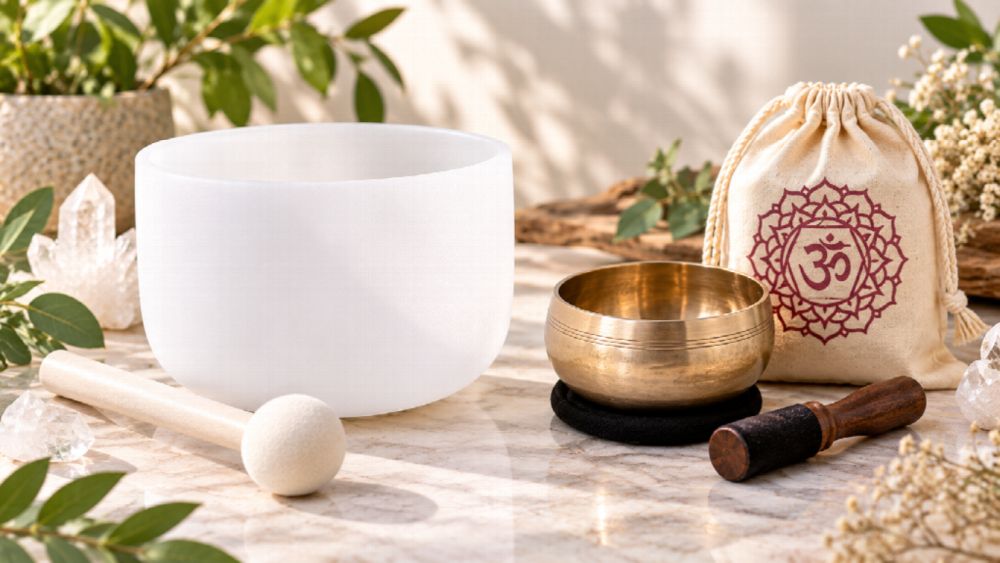
Anyone shopping for a singing bowl for the first time runs into the same fork almost immediately: a crystal singing bowl, translucent, frosted, and made from quartz, or a metal singing bowl, the older, alloy-based style most people picture when they hear the phrase "singing bowl" at all.
Both produce a sustained ringing tone when a mallet is run around the rim, and both show up constantly in meditation studios and sound bath sessions, but they come from different traditions, sound noticeably different, and tend to suit slightly different practices.
Where each style actually comes from
Metal singing bowls are the older of the two by a wide margin, with roots in centuries-old Himalayan and Tibetan craft traditions. They're typically made from a blend of several metals, hammered or cast into a bowl shape, which gives them a layered, complex tone with multiple overtones ringing at once. Crystal bowls are a much more recent invention, first produced in the late twentieth century as a byproduct of quartz manufacturing rather than as part of any centuries-old lineage. That newer origin doesn't make them any less legitimate as a sound tool, it just means their popularity is a modern development rather than an inherited tradition.
How the sound actually differs
This is usually the deciding factor for people trying to choose between them. Metal bowls tend to produce a warmer, more textured sound, with several tones layered on top of each other depending on where the mallet strikes. Crystal bowls, by contrast, ring out a single, purer, longer-sustaining tone, closer to a clean sine wave than the metal version's layered hum. Neither is objectively better, it's largely a matter of what someone finds easier to settle into. Some practitioners keep both types on hand specifically because the two tones serve different moments in a session, metal for the opening or closing of a practice, crystal for a longer, sustained stretch of listening.
Chakra associations, and how seriously to take them
Both styles are frequently sold as part of a seven-bowl set, one bowl per chakra, tuned to a specific note. A bowl tuned to a lower note is commonly associated with grounding and the Root Chakra, while a higher note is often connected with clarity and the Crown Chakra. It's worth being upfront that these pairings come from traditional and spiritual frameworks rather than anything scientifically measured, they're a way of organizing a practice and a shopping decision, not a documented physical property of the bowl itself. That doesn't make them less useful as a starting point, plenty of people find it genuinely helpful to have a specific intention attached to a specific bowl rather than picking one at random.
Which one to start with
If cost or size is a factor, metal bowls are generally lighter and less fragile than crystal ones, which matters if a bowl is going to travel to classes or get moved around a home often. Crystal bowls, being made of quartz, are more prone to chipping if set directly on a hard surface without a padded ring or cushion underneath. On the sound side, someone drawn to a fuller, more textured tone will likely prefer metal, while someone who wants a cleaner, more sustained ring, the kind that seems to hang in the air for an unusually long time after a single strike, will probably prefer crystal. A reasonable way to decide without overthinking it: listen to a recording of both at the same note and see which one you'd rather sit with for ten minutes.
Starting small versus building a full set
Both types are sold individually and as complete seven-bowl chakra sets, and there's no requirement to commit to a full set right away. A single bowl, in either material, is enough to build a simple practice around, struck once at the start and end of a meditation session, or used as the anchor for a longer sound bath. Expanding to a full set later, once it's clear which tone and material actually gets used, tends to be a more satisfying path than buying a complete set upfront and discovering only two of the seven bowls ever leave the shelf.
In the end, the choice between a crystal singing bowl and a metal singing bowl comes down less to which one is "correct" and more to which sound someone actually wants to spend time with. Both are legitimate tools for building a sound practice, and plenty of practitioners end up owning both once they've had a chance to compare them side by side.