Why the Fiddle Is Country Music's Most Underrated Instrument
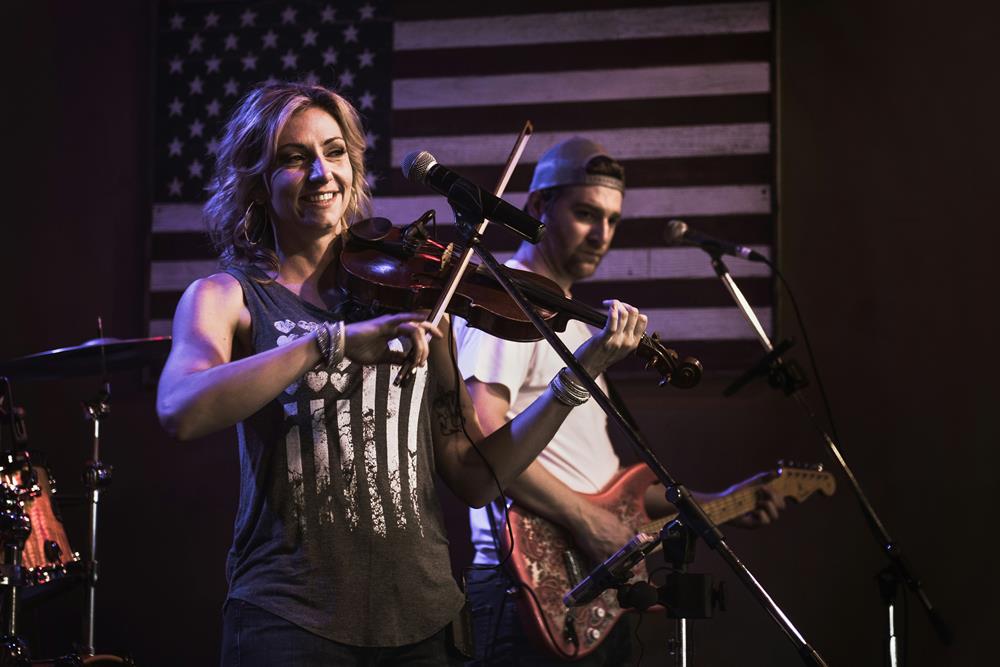
There's a moment in nearly every great country song where everything else — the rhythm guitar, the bass, the drums — falls into the background, and a single fiddle takes over. It cuts through the mix like nothing else in music. High and lonesome, sweet and mournful, rowdy and celebratory all at once. The fiddle doesn't just accompany a country song. It is the country song.
And yet somehow, in an era dominated by production-heavy pop-country and stadium anthems built around electric guitar walls and filtered vocals, the fiddle has quietly been pushed toward the margins. That's a shame, because when you look back at the artists who defined this genre — and when you look at the ones carrying it forward today — the fiddle is almost always somewhere in the room.
This is a love letter to that instrument and the players who've kept it alive.
The Golden Era and the Players Who Defined It
Through the 1950s, '60s, and '70s, the fiddle was as central to country music as anything else in the studio. Names like Vassar Clements, Johnny Gimble, and Bobby Hicks became legends not because casual fans necessarily knew their names, but because their work underpinned countless records that shaped the genre.
Vassar Clements in particular was a revelation. His session work stretched from bluegrass to rock and folk, and his playing on the Nitty Gritty Dirt Band's landmark 1972 album Will the Circle Be Unbroken introduced him to a generation of younger listeners. There was a looseness and improvisational quality to his style that felt almost jazz-adjacent, but never lost its deep country roots.
Charlie Daniels is probably the most well-known country fiddler in the popular imagination, and for good reason. "The Devil Went Down to Georgia" turned the fiddle into a genuine rock and roll instrument — fast, aggressive, bravado-filled — and introduced an entire generation of kids to the idea that a fiddle could be just as cool as a guitar. It was one of the defining country singles of the late '70s and it remains completely electrifying to hear today.
The Craft Behind the Instrument
There's another dimension to the fiddle conversation that often gets overlooked: the instruments themselves. A fiddle is, of course, a violin — the terms are used interchangeably depending on the musical tradition, and the instrument is identical whether you're playing Brahms in a concert hall or tearing through a breakdown at a honky-tonk in Nashville.
What this means is that country fiddlers are participating in a centuries-old tradition of instrument building and care. A quality violin or fiddle is an investment that, if properly maintained, can last generations. The wood, the varnish, the setup — all of it matters. Players who are serious about their sound typically spend considerable time thinking about how to protect and preserve their instruments, especially on the road.
For anyone getting deeper into the world of fiddle playing — whether you're a country musician, a classical player, or somewhere in between — understanding how to properly store and transport your instrument is essential. A good case is one of the most important purchases a player can make. For detailed guidance on choosing the right one, learn more at Great Violin Cases, which breaks down everything from hard-shell cases for touring musicians to lighter options for players on the move.
Serious fiddlers know that a beat-up case isn't just an aesthetic problem. Temperature changes, humidity swings, and the general chaos of being a working musician can crack a soundboard or warp a neck if the instrument isn't properly protected. The right case is part of respecting the craft.
The Roots Run Deep
The fiddle's connection to American country music isn't recent. It predates Nashville, predates the Grand Ole Opry, and stretches back to Appalachian folk traditions carried over from the British Isles and blended with African American musical influences in the rural South. Early country recordings in the 1920s were often built entirely around fiddle and banjo, with vocals almost as an afterthought.
What made those early recordings so powerful was the interplay between the fiddle and the other stringed instruments surrounding it. Country music has always been a string instrument genre at its core — the guitar, banjo, and mandolin each bring their own character to the table, and understanding how they differ as a family goes a long way toward understanding what the fiddle is actually doing in the mix. If you're curious about how those plucked string instruments relate to one another, this guide to the guitar family of instruments does a solid job breaking down the distinctions. The fiddle, of course, sits in a different family entirely — bowed rather than plucked — which is exactly what gives it such a unique voice when it steps into that conversation.
When you listen to artists like Uncle Dave Macon or early recordings from the Carter Family, you can hear the fiddle serving as both the melody carrier and the emotional anchor. It set the template for everything that came after.
Bob Wills and His Texas Playboys in the 1930s and '40s took that tradition and electrified it — literally — fusing fiddle-driven Western Swing with jazz and blues influences. Wills himself was a fiddler of the highest order, and his band featured multiple fiddle players at once, layering their lines in ways that felt almost orchestral. Songs like "San Antonio Rose" showed the world that the fiddle wasn't a quaint folk remnant. It was a serious musical force.
The Fiddle in Modern Country: Still Here, Still Essential
The conventional wisdom is that modern country abandoned the fiddle in favor of drum machines and arena-ready production. And it's true that plenty of mainstream country radio sounds more like mid-2000s rock than anything Hank Williams ever recorded. But look closer and you'll find the fiddle still doing serious work.
Chris Stapleton's music practically aches with the sound of it. His records feel deliberately rooted in an older, rawer tradition, and the fiddle and pedal steel are central to creating that atmosphere. Zach Bryan, who might be the most important artist in country music right now, uses the fiddle not as ornamentation but as an emotional statement. On tracks from American Heartbreak and Zach Bryan, the fiddle lines arrive at exactly the right moments to push a lyric over the edge from good to devastating.
Tyler Childers is another artist whose catalog rewards close listening specifically for the string work. His Appalachian roots come through clearly in the way fiddle and banjo interact on his recordings, and it's no coincidence that his most devoted fans are often people who grew up in rural communities where that tradition never stopped meaning something.
Even when the fiddle doesn't dominate a track, its presence can completely change the character of a recording. A few bars of fiddle in a bridge can transform an otherwise conventional country song into something that feels lived-in and real. That's not a small thing.
Covers and the Fiddle's Secret Weapon Status
One place where the fiddle's power becomes especially obvious is in cover recordings, where an artist takes a song that was originally built around a different sound and rebuilds it with string instruments at the center. If you've been following the growing tradition of country covers reimagining other genres, you'll notice that the best of them tend to lean hard into precisely this technique.
Take Wyatt Flores' cover of "How to Save a Life" — the rendition builds to a powerful emotional climax partly through the use of dramatic violin lines that the original, a piano-and-guitar production, never had. The strings add a dimension of gravity that transforms the song. Or consider how Ian Munsick's take on "Dreams" uses fiddle to carve out something entirely new from a song that everyone thought they already knew.
That's the fiddle's secret weapon status in a nutshell. It can change the emotional register of a song completely. It can take something that already works and make it feel more ancient, more urgent, more human. That's a rare quality.
Who to Watch Right Now
If you want to see the fiddle's future in country music, a few names deserve attention.
Lainey Wilson's live band features some excellent fiddle work that doesn't always translate fully onto her studio recordings, but live is where the instrument proves its worth. Her shows have an old-school energy partly because of how prominently the strings feature.
Sam Barber, who's had a serious breakout run lately, brings an Americana sensibility to his recordings where fiddle and acoustic instruments feel like primary colors rather than background texture. His version of "Jersey Giant" — one of the standout Tyler Childers covers floating around — leans into exactly that approach.
Charley Crockett is another artist who uses the fiddle the way classic country artists did: not to show off, but to tell the story better. His records have a cinematic quality that's inseparable from his string arrangements.
The Fiddle Isn't Going Anywhere
Country music has changed enormously over the past three decades, and not all of those changes have been universally embraced by fans who grew up on a certain sound. But the fiddle persists. It shows up on the records that matter most, in the live performances that leave audiences stunned, in the covers that manage to transform a familiar song into something entirely unexpected.
Part of what makes country music country music is its relationship to tradition — not in a rigid or exclusionary way, but in the sense that the genre has always known where it came from. The fiddle is the clearest line from that origin to everything happening in country music today.
As long as there are artists who care about that line, the fiddle will be there, cutting through the mix, doing what it's always done.